
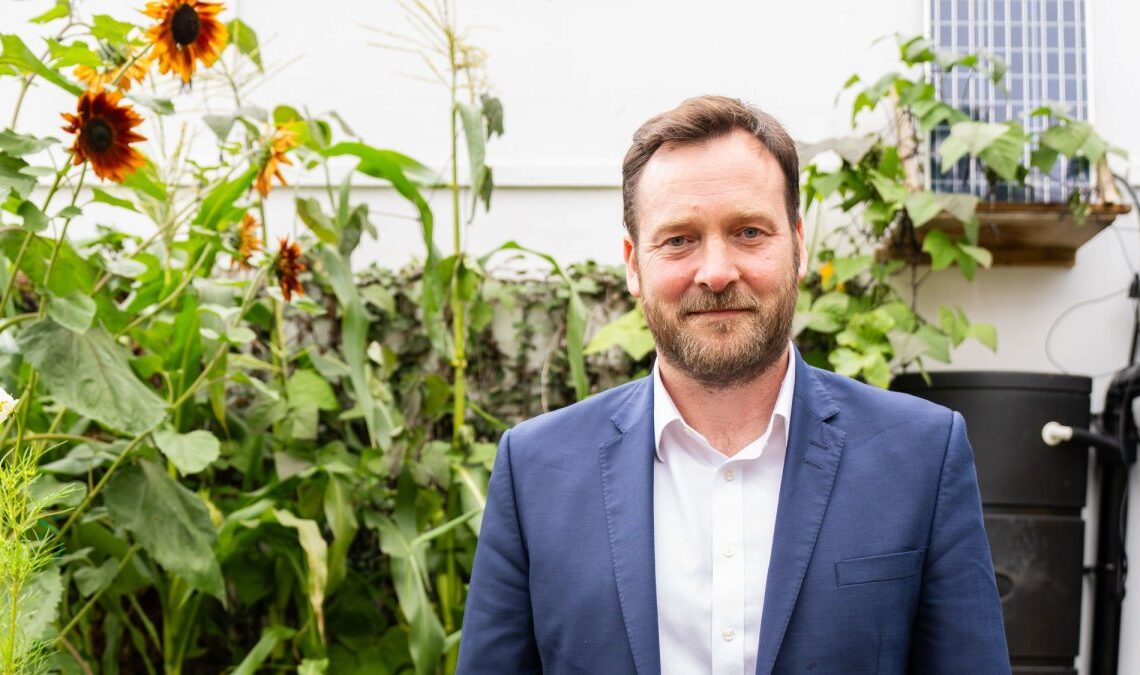
(Photography by Elio Zhang)

9 min read28 min
Andy Burnham has got his pick of general secretary. Sienna Rodgers asks what Joe Fortune’s appointment tell us – and how he plans to prepare Labour HQ for the next election
If Andy Burnham does decide to call an early election, he has just chosen the man who will be responsible for ensuring the Labour machine is up to the job.
With this hire, the Co-operative Party’s coup is complete. Not satisfied with becoming the fourth-largest party in the Commons at the last general election, both No 10 and Labour HQ have now been acquired too: we have the first Co-op Prime Minister, who in turn has chosen Joe Fortune, the head of the Co-op Party, as Labour’s new general secretary. Quite the feat for such a mild-mannered outfit.
The relationship between Labour and its sister party is not widely understood. The pair have an almost century-old electoral agreement that allows them to put up joint candidates and prevents nominees from standing against each other. Many more Labour MPs are personally Co-op members (two-thirds of the Parliamentary Labour Party, in fact) than officially represent the party in Parliament. The Co-op also has representation beyond Westminster, with mayors and councillors too.
The party’s aim is to promote co-operative values. Instead of nationalisation, it favours mutualisation and community ownership, on the basis it produces better outcomes – and, crucially, more durable ones, less easily undone by right-wing successors to Labour administrations.
“If people in 1844 could form the co-operative movement in Rochdale to lower the price of food, then why can’t we act now, with similar courage, to make life better?” Burnham declared in his first big speech after winning Makerfield. The Labour manifesto commits the party to doubling the size of the co-operative sector, but it is too early to tell whether co-ops will dominate his government’s agenda beyond that. Still, the PM name-dropping the ‘Rochdale Pioneers’ has turned out to be a reliable indicator of his preferred personnel.
Hollie Ridley, Sir Keir Starmer’s second general secretary, often regarded as a protégé of Morgan McSweeney while also being a working-class woman who worked her way up to the top of Labour on merit, announced in July that she was stepping down. It was reported at the time that she was forced out via “toxic” briefings by Burnham allies, though this is strongly denied by No 10, where it is said the news of her departure came as a complete shock.
However it happened – and it is far from unusual for a new general secretary to follow soon after a new Labour leader – the vacancy has enabled Burnham to choose a successor of his liking. He decided against the two other initial frontrunners for the post: Claire Reynolds, the former No 10 political director who moved to Labour HQ last year, and is married to reinstated Business Secretary Jonathan Reynolds; and John Lehal, the consultant and ex-COO of the party who helped run Burnham’s 2015 leadership campaign.
The Fortune camp insists the rival candidates each came to the decision not to put in any application for the job independently, without pressure. Burnham had made his preference clear, however, and the feeling on Labour’s national executive committee (NEC) was that a new leader should have their pick. “You have to be really ballsy to want to be general secretary against the leader’s wishes,” as one NEC member put it to The House before Reynolds and Lehal confirmed they were not applying.
In the end, it was from a shortlist of just one that the ruling body interviewed and unanimously selected Fortune. Labour conference is now expected to formally ratify the appointment before a handover takes place the following week.
Fortune, 44, is a father of two who lives in south London with his wife and watches trashy reality TV to switch off from work. At 6ft5, he has been called a “literal giant of the labour movement”. He comes across as quiet but is highly social, with a friendship group in Labour/Co-op politics that includes Alex Norris, now Justice Secretary; Emma Foody, a 2024 intake MP and whip who is married to Norris; Jonny Reynolds; Miatta Fahnbulleh; Jim McMahon; and Caitlin Prowle, who will be Co-op’s interim general secretary when Fortune leaves his post.
“You have to be really ballsy to want to be general secretary against the leader’s wishes”
Burnham and Fortune have known each other for some years, and are considered longstanding allies, but they are not close friends.
There are striking similarities: both Liverpudlian men with Catholic backgrounds, who have worked for the Labour Party, put a strong sense of place at the core of their politics and assert a rejection of factionalism. Yet they have trodden different paths through the labour movement. Plus, aside from a 12-year age difference, there is another impediment: Fortune is a Liverpool fan; Burnham is an Evertonian.
So, why was he the favourite for general secretary? After all, Fortune’s detractors say the organisation he has run for the last nine years is incomparable in scale to the Labour Party.
Highly influential fixers Louise Haigh and Anneliese Midgley, both understood to be close to Fortune, had significant sway. That the unions were all supportive mattered too. And, despite being the PM’s pick, Fortune is said to have put the work in, making calls to every member of the NEC – further proof he understands the power of relational politics in Labour.
“He’s got his own very good networks. He is also somebody who just gets on and does the job – it’s not about him. I suspect he won’t want to be a big public figure. People who’ve worked with him talk about how he’s a very good leader, manager and strategist. And there’s not any drama around him,” explains a No 10 source.
“The importance the Prime Minister sees in driving through culture change in the party – Joe is seen as the person to do that.”
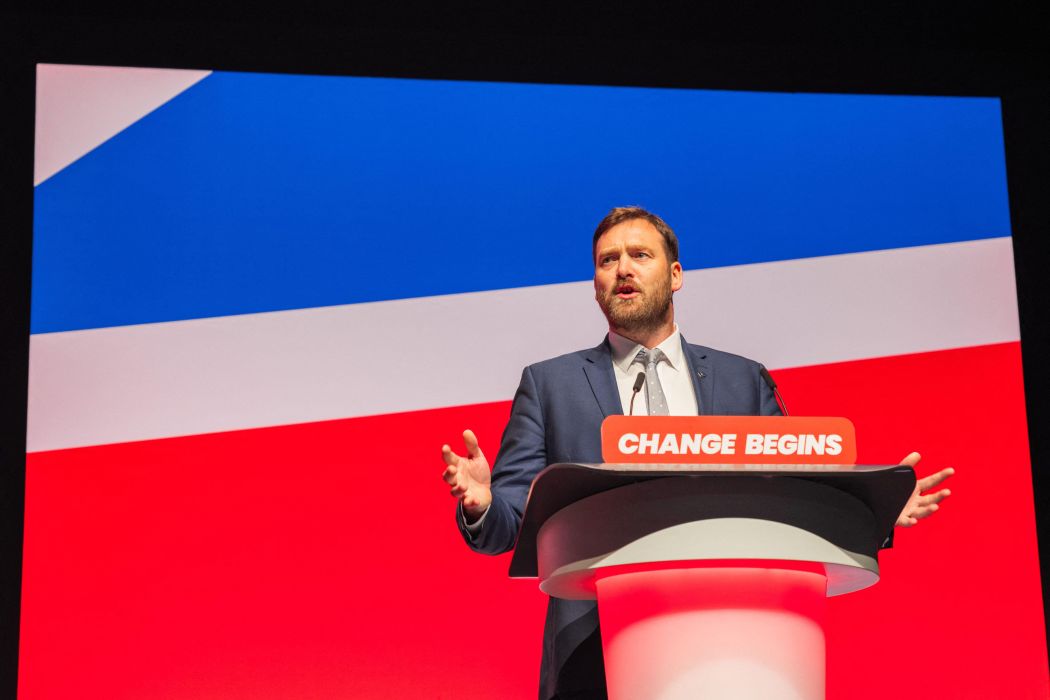
Both the Prime Minister and the incoming general secretary like to talk of there being “one Labour”. In seeking the job, Fortune also proposed that the party should work more with civil society groups and engage with people outside the membership to sustain Labour deep into the 21st century.
The men use similar rhetoric that leans heavily on the distribution of power. They share the idea that politics has become too centralised.
When Fortune enters HQ to take up the role, he is expected to apply that to party structures by strengthening Labour’s regions. To map out what needs to be done, he will get the regional directors together early on, in the belief that lessons in creativity and innovation come from them.
Elections will take place across the UK next year, including all local authorities in Scotland and Wales. Labour figures would be forgiven for dreading these somewhat, considering the mauling the party suffered in the devolved nations in May, when – most notably – it lost control of the Senedd for the first time. In 2028, a big set of mayoral elections will see large areas require massive field operations.
And then there is the possibility of a snap general election sooner rather than later. Sir John Curtice may not believe it is in Labour’s interests, as Reform could well secure the most seats, but nonetheless suspicion is rife throughout Burnham’s party that he will want to win his own mandate after setting out a 10-year plan for the country this winter.
“He’s got his own very good networks… And there’s not any drama around him”
For all the lofty talk of empowering communities and so on, the biggest challenge facing Fortune is more mundane: money. Labour has run a deficit for the last three years: £850,000 in 2023; £3.76m in 2024; £2.55m in 2025. (The Conservatives and Reform UK both recorded a surplus last year.) After entering government, Starmer’s party saw members and high-value donors fall away, as the frustrations of governing became acute. The party also lost its director of fundraising, Rachael McCaffrey, at the end of 2024 and has not been able to replace her.
There may have been a bump in membership since Burnham took over – we don’t yet know – but nobody is claiming a Corbyn-era-style boost. Since the start of the year, Unite has cut its affiliation fee by 40 per cent, reducing its funding from £1.45m to £870,000, and there was a perceived reluctance on Labour’s part to be asking members for money, resulting in fewer fundraising emails to them. The cost of numerous by-elections – at which Labour “threw the kitchen sink”, in the words of one insider – will have hit particularly hard.
Fortune’s focus at Co-op is said to have been increasing membership – leading to a 30 per cent rise – and upskilling himself in methods aimed at retention in particular. He is determined to improve the party’s relationship with its members.
Fortune also reckons the best anti-Reform work is currently being undertaken by trade union reps and wants the party to connect with those efforts. That suggests a renewed focus on Labour seeking face to face engagements in workplaces and communities.
Staffing will need to be another key focus for Fortune, after sources say more attention in HQ was paid to politics and management of late than who to bring in for the next short campaign.
The House understands that Fortune is interested in returning Labour to its more traditional structure, with deputy general secretaries rather than executive directors.
The accusation of a “boys’ club” has been revived by critics, who point to Burnham’s choices of Chancellor, Foreign Secretary and general secretary. These are naturally dismissed by No 10 as “nonsense”, and allies point to the influence of Haigh and Midgley. A source close to Fortune stresses that, for his part, he is “not someone who hoards power” but is instead a “trusting leader, especially of young women”, such as Foody and Prowle, who’ve both been assistant general secretaries at Co-op.
Fortune will be taking the job at a “difficult time in the cycle”, a No 10 source admits. Reform’s recent mega-donations have only made Labour’s situation look more challenging.
The Co-op may have taken over Labour with impressive speed, but Fortune’s next task is much harder: to restore the country’s governing party into a well-oiled machine, ready for the next election.