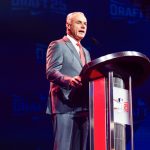

Is Ryan Cohen giving up on eBay? Not according to Bloomberg’s Monday, Aug. 10, report, but the ambition has clearly shrunk. Six weeks ago, Cohen told Bloomberg TV he was coming for eBay “one way or another.”
Now, people familiar with the matter tell Bloomberg that GameStop’s CEO is weighing whether to withdraw his $56 billion takeover bid entirely.
From takeover to partnership pitch
In place of full ownership, Cohen is reportedly considering a joint venture that would let eBay tap GameStop’s roughly 1,600 U.S. retail stores, according to Bloomberg.
The goal would be growing both companies’ presence in trading cards and collectibles, categories where they already compete. GameStop would also seek seats on eBay’s board as part of any partnership, Bloomberg reported.
Related: GameStop just cleared a hurdle nobody was watching
GameStop has not made a final decision, and Cohen could still pursue other options, Reuters reported Aug. 10. GameStop shares rose roughly 1.6% in early trading, while eBay fell about 2.2%, according to Reuters.
Investors appear to be reading the retreat as relief rather than defeat, a reversal from Cohen’s tone in June, when he told Barron’s in a securities filing that eBay was simply “a great business that’s been poorly managed.”
GameStop’s financing math fell short
The original offer, filed in May as a non-binding proposal, priced eBay at $125 a share in half cash and half stock, a 46% premium to where eBay traded before GameStop began buying.
EBay’s board rejected it nine days later, calling the proposal “neither credible nor attractive” in a letter disclosed in an SEC filing. The board’s stated objection was financing, not price.
That skepticism proved contagious. Michael Burry, the investor known for betting against subprime mortgages before 2008, sold his entire GameStop stake days after the bid became public. “I of all people should have known,” he wrote, according to Yahoo Finance.
Burry had spent months promoting an “Instant Berkshire” thesis for GameStop, and said the debt load required to close a deal this size never fit the disciplined, low-leverage company he had backed.
The numbers explain why. GameStop’s market value has fallen to roughly $8.6 billion, according to Bloomberg, barely above the $8.4 billion in cash the company holds.
A company whose equity value barely clears its own cash pile has little room to borrow the tens of billions needed to buy a target nearly six times its size.
Brandon Bell / Getty Images
GameStop weakens as eBay stock climbs
Since GameStop’s offer in May, its stock has fallen 28%, while eBay’s has climbed 7.6%, according to GuruFocus. That gap works against an acquirer paying partly in its own stock.
GameStop kept building its eBay position anyway, reaching a 9.75% stake by mid-July, a persistence I examined in June, making it eBay’s second-largest shareholder behind only Vanguard’s index funds.
More GameStop:
- GameStop just cleared a hurdle nobody was watching
- Ryan Cohen passes on GameStop payday to keep pushing one acquisition
- No, GameStop is (probably) not buying eBay — here’s why
That buildup is what makes today’s pivot notable. GameStop shareholders voted in July to authorize up to 2.5 billion Class A shares, a move tied directly to funding a bigger stock component of a future eBay bid.
A partnership requires none of that currency, which raises a fair question about why the vote happened at all if the plan was shifting toward something smaller.
The categories in today’s proposal are not random, either. Collectibles and trading cards made up 41.8% of GameStop’s first-quarter revenue this year, up from 28.9% a year earlier, according to a GameStop earnings release.
A joint venture solves a real problem without the borrowing that worried eBay’s board. GameStop gains access to eBay’s collectibles marketplace and its buyer base, while eBay gains physical stores that can authenticate and sell goods, something no online marketplace easily replicates on its own.
Big swings that shrink are becoming the norm
Cohen’s retreat fits a pattern bigger than GameStop. High-profile buyers who make outsized bids for much larger targets, then scale back once financing questions mount, are becoming a recurring feature of this dealmaking cycle, rather than an exception.
Elon Musk’s renegotiated Twitter acquisition in 2022 followed a similar arc, with an audacious opening bid giving way to public resistance and then a smaller, more defensible outcome.
For GameStop shareholders, the lesson isn’t that Cohen failed. It’s that markets increasingly punish reach before they reward ambition, pushing even confident buyers to negotiate down from headlines to something their balance sheet can actually support.
Whether Cohen can turn that smaller ask into an actual signed agreement, after two rejections already, is the next test investors should watch.
Related: Ryan Cohen passes on GameStop payday to keep pushing one acquisition